Add Row
Add Element
cropper
update
Home Owners Vibes
update
Add Element
  • Home
  • Categories
    • interior
    • decor
    • inspiration
    • atmosphere
    • trends
    • design
    • comfort
    • Food & Travel
    • House Hold Tips & Ideas
    • home
    • Home Improvement Tips
    • Roofing & Exterior Maintenance
    • Interior Remodeling & Design
    • Budgeting & Financing for Home Projects
    • Hiring & Working with Contractors
    • Landscaping
    • Garden
    • Real Estate
May 04.2025
3 Minutes Read

DIY Drywall Repair Made Easy: Fix Any Hole in Your Home Quickly

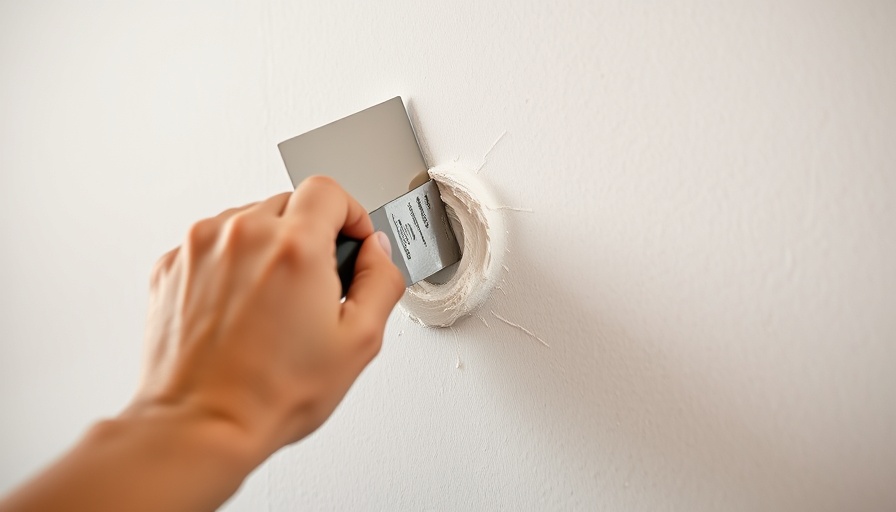
Close-up of fixing a hole in drywall with a putty knife.

Mastering Drywall Repairs: A Homeowner's Essential Guide

Learning how to repair a hole in drywall might seem daunting, but with a few tools and the right technique, any homeowner can restore the beauty of their walls. This quick guide will walk you through a simple yet effective process to tackle small drywall imperfections in your home.

Why Drywall Maintenance Matters

Drywall is a standard material used in most homes due to its affordability and ease of installation. However, it’s susceptible to damage from various sources—kids bouncing balls, furniture knocks, or even overzealous vacuuming. Addressing these small damages not only enhances the aesthetics of your space but prevents potential issues from escalating into larger repairs.

The Right Tools for the Job

Before diving into the repair, ensure you have the right tools at hand. You’ll need:

  • Fine-grit sanding sponge or a putty knife
  • Spackle or drywall compound
  • Clean rags to remove dust
  • A work light to illuminate the area
  • A paintbrush for the finishing touch

Using high-quality materials will yield better results, making your repairs virtually invisible.

Step-by-Step: Fixing Drywall Holes

Follow these straightforward steps to fix small holes in your drywall:

  1. Turn On Your Work Light: Illuminate the area you plan to repair. This helps highlight imperfections that may not be visible in natural light.
  2. Sand Down the Area: Use a fine-grit sanding sponge or putty knife to smooth the edges of the hole. This step ensures better adhesion for the spackle.
  3. Clean the Dust: Once you've sanded, wipe down the area with a damp rag to remove any dust. Allow it to dry thoroughly.
  4. Apply Spackle: Using a putty knife, apply a layer of spackle evenly over the hole. Ensure it fills the space completely.
  5. Wait for It to Dry: Depending on temperature and humidity, drying times can vary. Generally, allow it to dry for at least one hour.
  6. Sand and Paint: Once dry, sand the area for a smooth finish and then touch up with matching paint.

By following these six simple steps, you can achieve professional-looking results in under two hours—a confidence boost for any DIY enthusiast!

Visual Aids: The Importance of Proper Lighting

Utilizing a work light not only helps see smaller imperfections but also aids in creating a better finish post-repair. Many homeowners may overlook the significance of proper lighting during home improvement tasks. An illuminated workspace can drastically change the quality of your end result and save you from missed spots that lead to further issues down the line.

Eco-Friendly Thoughts on Home Repairs

As we become more conscious of our environment, home repairs should also embrace sustainable practices. Opt for eco-friendly spackling compounds that reduce volatile organic compounds (VOCs) in your home. These products are better for your health and the planet, setting a positive precedent when it comes to maintenance.

Now that you are equipped with the knowledge and tools needed for drywall repairs, don't let small imperfections hold you back from achieving a beautiful living space. Take action today and implement these tips!

Home Improvement Tips

5 Views

0 Comments

Write A Comment

*
*
Related Posts All Posts
02.23.2026

Home Depot Tool Savings Event: Save Big for Spring Projects

Update Get Ready for Spring Projects with Exciting Deals from Home Depot Spring signifies a time for renewal, and what better way to kickstart your home and yard projects than by taking advantage of the Home Depot Tool Savings Event? This annual sale is the prime opportunity for homeowners to grab high-quality tools at significant discounts, ensuring that your DIY aspirations aren’t just dreams but achievable realities. What to Expect from the Tool Savings Event The Home Depot Tool Savings Event brings together some of the best brands in the market, including Milwaukee, DeWalt, and Ryobi. This year’s event promises impressive offers, including free batteries and buy-one-get-one deals on essential power tools, outdoor gear, and tool storage solutions. It’s no wonder many homeowners wait for this event to stock up on these essential items. Must-Have Tools for Every Homeowner Here’s a closer look at some top picks that will make your spring projects a breeze: Milwaukee M12 Brushless Cordless Extended Reach Box Ratchet - Perfect for auto techs and mechanics, this tool comes with a free battery pack with purchase. Designed to reach tight spaces without compromising on power, it makes wrenching easy. Milwaukee M12 12V Cordless Compact Band Saw - Lightweight and compact, this saw is ideal for detailed cutting tasks. Purchasing it also nets you a free battery! Milwaukee M18 18V High Torque Impact Wrench - This impact wrench turns challenging tasks into effortless feats, and you can score it for free with the purchase of a qualifying Milwaukee tool. Why Investing in Quality Tools Matters Investing in quality tools is more than just about having the right equipment; it’s about enhancing your overall project experience and ensuring safety. Reliable tools can help prevent accidents and save time, enabling you to complete your projects efficiently. Tips for Maximizing Your Savings To get the most out of the Home Depot Tool Savings Event, consider these tips: Plan Ahead: Identify what tools you need before the event starts to avoid impulse buys. Do Your Research: Compare prices and read reviews to ensure you’re getting the best deals. Utilize Loyalty Programs: Don’t forget to take advantage of any loyalty or credit card rewards offered by Home Depot for further savings. Turning Your Vision Into Reality This event is not just about saving money; it’s about equipping yourself with the right tools to turn your home improvement dreams into reality. Whether it's a small gardening project or a full-scale renovation, having the right tools can make all the difference. So, gear up for the season and make the most of the Home Depot Tool Savings Event! Make Your Best Home Improvements Yet! With spring right around the corner, now is the perfect time to gear up for your home improvement projects. Don’t miss your chance to save big at the Home Depot Tool Savings Event. Head to your nearest store or visit their website to discover fantastic deals that make your DIY dreams achievable!

02.21.2026

The Digital Survival Guide: Stay Online During a Blackout

Update Staying Online During Power Outages: Your Essential Guide Many homeowners today rely heavily on the internet for work, communication, and entertainment. However, as any of us who’ve experienced prolonged power outages can attest, being cut off from connectivity can be a major inconvenience. A recent J.D. Power report highlighted that 45 percent of U.S. households faced power outages just in the first half of 2025, emphasizing the urgency of planning ahead. Understanding the Problem When the power goes out, many assume that their internet will go down too. However, it’s often the equipment in your home that loses power, while the internet infrastructure outside remains operational. To stay connected during outages, one must equip their home with the right tools and knowledge. Effective Backup Solutions to Consider To maintain internet connectivity during an outage, here are some practical options: Mobile Hotspots: Utilizing your smartphone’s mobile hotspot feature can keep you connected temporarily. This method might drain your battery quickly, so consider using it for short outages, and ensure that you know your plan’s data limits to avoid any unexpected charges. Backup Power Sources: Investing in a Uninterruptible Power Supply (UPS) can power your modem and router seamlessly for a few hours until services return. For extended outages, portable power stations can be particularly useful. Generators: A traditional generator can provide long-term power. If considering a gas generator, ensure it is used outdoors to avoid carbon monoxide risks. Solar generators are a great option too, as they require no fuel replenishment. Home Internet Backup Options Some Internet Service Providers (ISPs) offer specific plans that include backup options when your service goes down. For instance, Xfinity’s Pro plan incorporates a battery-powered Wi-Fi extender that switches to a 4G LTE connection automatically during outages. Consider comparing these plans if you anticipate needing reliable internet access during power interruptions. Preparation is Key Preparing for power outages requires forethought. Ensure that all devices are fully charged and ready prior to any anticipated outage. Gather important supplies, such as: Fully charged devices like phones, tablets, and laptops. Generators or portable power stations filled with fuel. Backup batteries for your internet devices. Moreover, developing a plan for your family can help everyone know what to do during outages, minimizing stress and confusion. Final Thoughts While power outages are often an unavoidable part of life, especially in areas prone to severe weather, taking proactive steps can significantly mitigate their impact. By investing in backup solutions and staying prepared, you can keep connected and make sure that you’re always informed during outages. Embrace these practical steps to not only stay online but to ensure your home remains a hub of connectivity even when nature decides otherwise.

02.20.2026

Navigating the Legal Gray Areas: Using Screens While Driving

Update The Evolving Role of Screens in Modern VehiclesAs technology advances, screens in our cars have transitioned from luxury features to essential components. Vehicles manufactured in the last decade frequently come equipped with a host of screens for navigation, entertainment, and even safety. However, integrating these modern conveniences with safe driving practices raises significant concerns. With backup cameras mandatory in newer vehicles, drivers are left navigating the fine line between utility and distraction.Understanding the Legal LandscapeWhen it comes to using screens in cars, the legal landscape across the U.S. is quite complex. Federal safety standards established by the National Highway Traffic Safety Administration (NHTSA) provide guidelines for manufacturers, ensuring that certain features are disabled while the vehicle is in motion. However, these regulations often leave it up to state laws to further dictate what drivers can or cannot do. For example, factory-installed systems typically restrict video playback when the vehicle is in gear, yet drivers still enjoy access to navigation maps and audio functions.Smartphone Use: A Universal NoWhile built-in screens might have restrictions, smartphones are a different story. Regulations across all states prohibit drivers from watching videos on their smartphones while driving. Additionally, texting is strictly outlawed nationwide. State laws vary when it comes to using handheld devices, but platforms like Apple CarPlay and Android Auto are programmed to prevent video app usage during motion, aligning with safety interests.Passenger Privileges and LimitationsWhat happens if someone in the passenger seat is watching a video? In states like California, the answer is a bit more relaxed. Passengers can legally engage with content on their devices while the vehicle is in motion. However, this privilege does not extend to the driver. The law maintains that while the passenger might be able to enjoy a movie, the driver must remain focused solely on the road.The Grey Areas of Distracted DrivingDespite the existence of specific regulations, many drivers operate under ambiguities regarding what is permissible. Various states employ broad distracted driving statutes rather than clear definitions concerning screen usage, making it crucial for drivers to be cautious. Dashboard-mounted devices or aftermarket systems can easily lead to confusion, propelling the importance of understanding local driving laws.What Every Driver Should KnowWhile screens are becoming integral to our driving experience, safety must always come first. Each driver is responsible not just for their actions but also for maintaining the safety of their passengers and others on the road. To stay on the right side of the law, ensure that your screens comply with the latest regulations and make it a habit to prioritize safety over entertainment.

Terms of Service

Privacy Policy

Core Modal Title

Sorry, no results found

You Might Find These Articles Interesting

T
Please Check Your Email
We Will Be Following Up Shortly
*
*
*